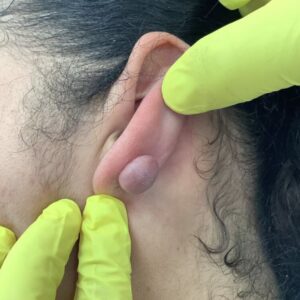
Moles on the face, particularly on the cheek, are very common. While most are harmless, some people choose to have them removed either because they are cosmetically distracting or because they want reassurance that the mole is not harmful.
At our clinic, we regularly assess and treat patients with facial moles. This includes full skin checks to rule out anything suspicious, alongside mole removal procedures for those who wish to improve comfort or appearance.
One such patient presented with a raised mole on the left cheek. Although the mole showed no signs of skin cancer, they chose to have it removed due to its visible location. This case highlights both the cosmetic and medical considerations of mole removal.
When Should a Cheek Mole Be Checked?
Most moles are benign, meaning they are not cancerous and do not require treatment. However, moles on the face deserve particular attention because they are highly visible and any changes can be noticed quickly.
A mole should be checked if it shows any of the following:
- Rapid growth or change in size
- Irregular shape or uneven borders
- Variation in colour (multiple shades or very dark pigment)
- Bleeding, itching, or crusting
- New symptoms in adulthood
These are known as the ABCDE warning signs (Asymmetry, Border, Colour, Diameter, Evolution). If any of these are present, the mole should be assessed by a dermatologist.
The Mole Removal Procedure
Mole removal on the cheek is usually performed under local anaesthetic. The aim is to remove the mole completely while leaving the smallest possible scar. The technique chosen depends on the type and depth of mole:
- Shave removal – best for raised moles that sit on the surface of the skin. The mole is shaved flat, often leaving a faint mark.
- Excision removal – used for deeper or pigmented moles. The entire mole and root are cut out with a fine margin of skin, and stitches are used to close the wound.
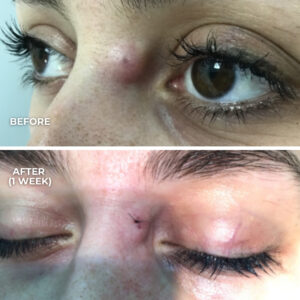
In this patient’s case, excision removal was performed. The mole was carefully removed, and fine stitches were placed to achieve the best cosmetic outcome. Photos show the mole before treatment, immediately after closure, and at follow-up when the scar had started to settle.
Full Skin Examination and Risk Assessment
Because the patient had multiple moles across the body, a full skin examination was carried out. This included assessment of the scalp, mucosal areas, and hands and feet. Dermatoscopic analysis confirmed that none of the moles were concerning, and there was no evidence of suspicious changes.
The patient was reassured but advised on long-term monitoring, as people with a high mole count have a slightly higher lifetime risk of developing melanoma.
Aftercare and Healing
After mole removal on the cheek, patients are advised to:
- Keep the wound clean and dry for the first 24–48 hours
- Follow dressing advice from the doctor
- Avoid strenuous activity that may stretch the wound
- Protect the area from sun exposure to reduce scarring (SPF 30+)
Stitches are usually removed after 5–7 days on the face, unless dissolvable sutures are used. Scars may look red or raised at first but generally flatten and fade over several months.

In this case, the cheek scar healed well and became far less visible over time, blending into the natural skin.
Long-Term Skin Health Advice
Because of the patient’s higher mole count, they were advised to carry out monthly self-checks at home and return urgently if any mole changes in appearance or symptoms. Sun protection measures were also reinforced, including daily use of sunscreen, avoiding peak UV hours, and wearing protective clothing outdoors.

Annual skin reviews were recommended to monitor mole health and provide early reassurance if changes occur.