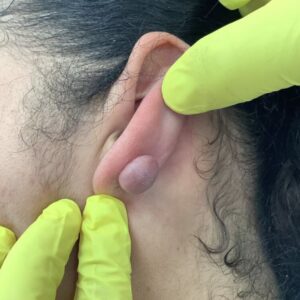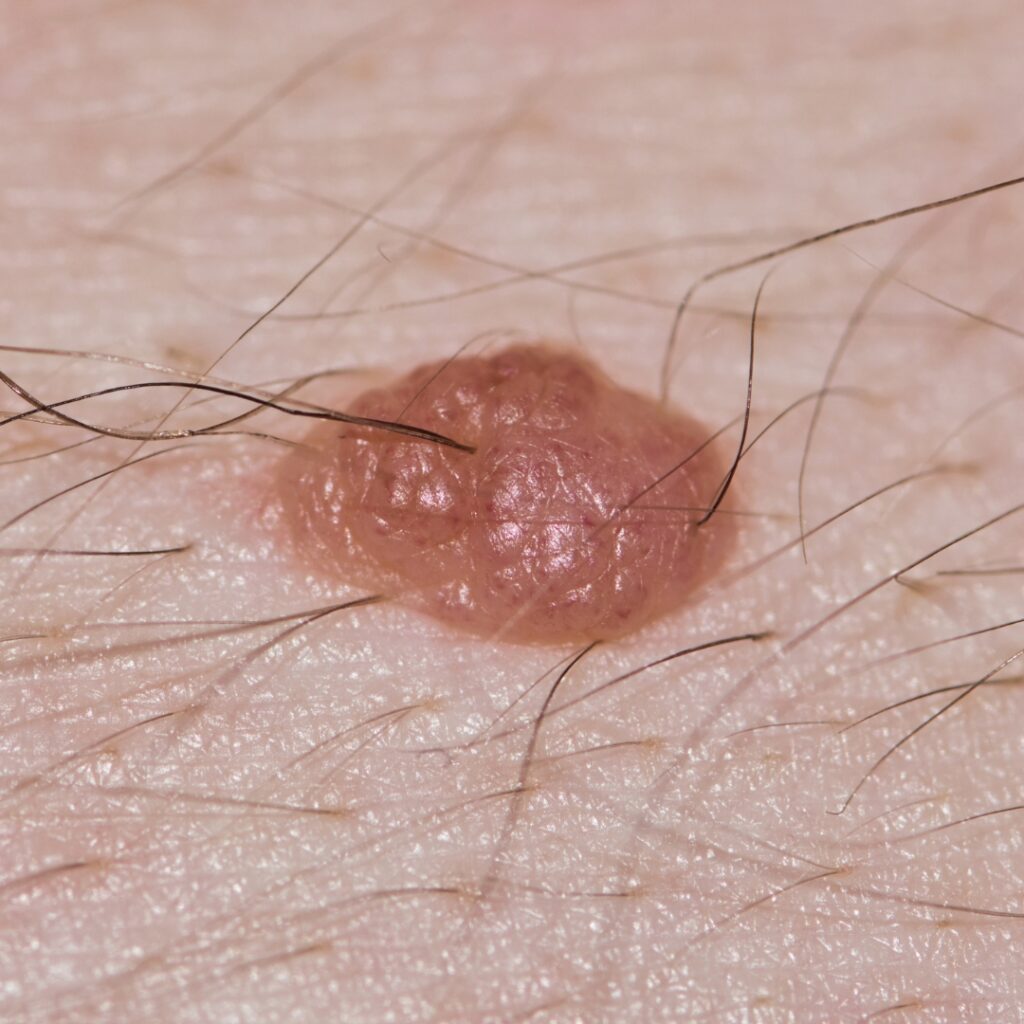
Hairy moles are common and, in most cases, completely harmless. These moles grow hair because the follicle sits within the mole itself, and while they rarely pose a medical concern, many people choose to have them removed for cosmetic reasons or to prevent irritation.
Modern mole removal techniques make the process quick, safe, and precise, with options tailored to the mole’s size, location, and whether lab testing (histology) is required.
What Hairy Moles Are
A hairy mole is a type of benign (non-cancerous) mole that contains hair follicles. Because the hair root is embedded within the mole tissue, the hair often grows thicker or longer than surrounding hairs.
Why some moles grow hair
- Hair follicles are present in most areas of skin, including within some moles.
- When these follicles are more active, the mole may produce darker or more noticeable hair.
When they’re harmless and when to get them checked
Most hairy moles are completely safe and do not increase the risk of skin cancer. However, you should book a professional assessment if the mole:
- Changes in size, shape, or colour
- Starts bleeding, crusting, or itching
- Develops pain or discomfort
Reasons for Removing a Hairy Mole
While not medically necessary in most cases, many people opt to have a hairy mole removed.
Cosmetic concerns
Hairy moles, particularly on visible areas like the face, neck, or hands, can affect confidence. Removal provides a smoother, more even appearance.
Irritation or discomfort
Moles that grow thick hair can catch on razors, clothing, or jewellery, leading to irritation or bleeding. Removing the mole prevents ongoing discomfort.
Medical assessment for safety
Some patients choose removal for peace of mind, ensuring the mole is sent for histology to confirm it’s benign.
Hairy Mole Removal Options
Several techniques can be used to safely and effectively remove a hairy mole. The best method depends on factors such as the mole’s size, depth, and location.
Shave excision
- Ideal for raised, benign moles
- The mole is numbed, shaved level with the skin surface, and the area heals flat
- No stitches are required, and scarring is usually minimal
Surgical excision
- Recommended for deeper moles or when histology testing is needed
- The mole and its root are removed completely, and the area is closed with fine stitches
- Provides a permanent solution and is the safest option when there’s any diagnostic uncertainty
Laser removal (specific cases)
- Suitable for small, superficial moles in purely cosmetic cases
- Less invasive but may require multiple sessions
- Not recommended when histology testing is required
Procedure and Recovery
Modern mole removal procedures are quick, straightforward, and performed under local anaesthetic.
What to expect on the day
- The area around the mole is cleaned and numbed with a small injection.
- Depending on the method, the mole is either shaved flush with the skin or excised completely.
- Most treatments take less than 20 minutes and are done in a single visit.
Healing timeline and aftercare tips
- Shave excision: A small flat scab forms and heals in 7–10 days.
- Surgical excision: Stitches are removed after 7–14 days, depending on the area.
- Keep the area clean and dry during the initial healing phase.
- Apply sunscreen daily once the area heals to prevent pigmentation changes.
Scarring and cosmetic results
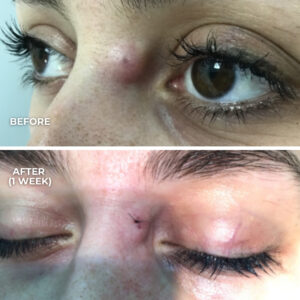
- Shave excisions leave a faint flat mark that fades with time.
- Surgical excisions leave a fine line that typically blends well over several months.
- Following aftercare instructions carefully helps scars heal as smoothly as possible.
Cost of Hairy Mole Removal in the UK
The cost of removing a hairy mole varies depending on the size and depth of the mole, the technique used, and the location of the clinic.
| Service | Typical Price Range |
|---|---|
| Single mole shave excision | £250 – £450 |
| Surgical excision with stitches | £350 – £600 |
| Histology (lab testing) | £50 – £150 |
| Additional mole removal (same session) | £100 – £150 per mole |
London clinics often charge toward the higher end of the range, reflecting higher operating costs and specialist expertise.