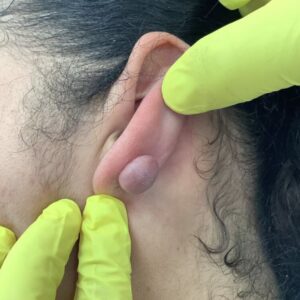
Facial moles are a common reason patients attend our City of London – Queen Street clinic, particularly when lesions are visible, raised, or affecting confidence. Because facial skin heals differently from other areas of the body, careful assessment and technique selection are essential.
This case study outlines how facial mole shave removal is approached in practice at our Queen Street clinic, using a recent patient example to illustrate the process.
Assessment of facial moles
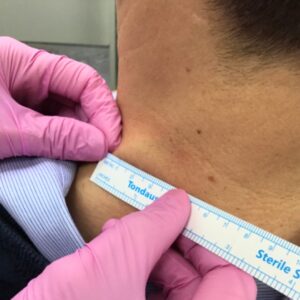
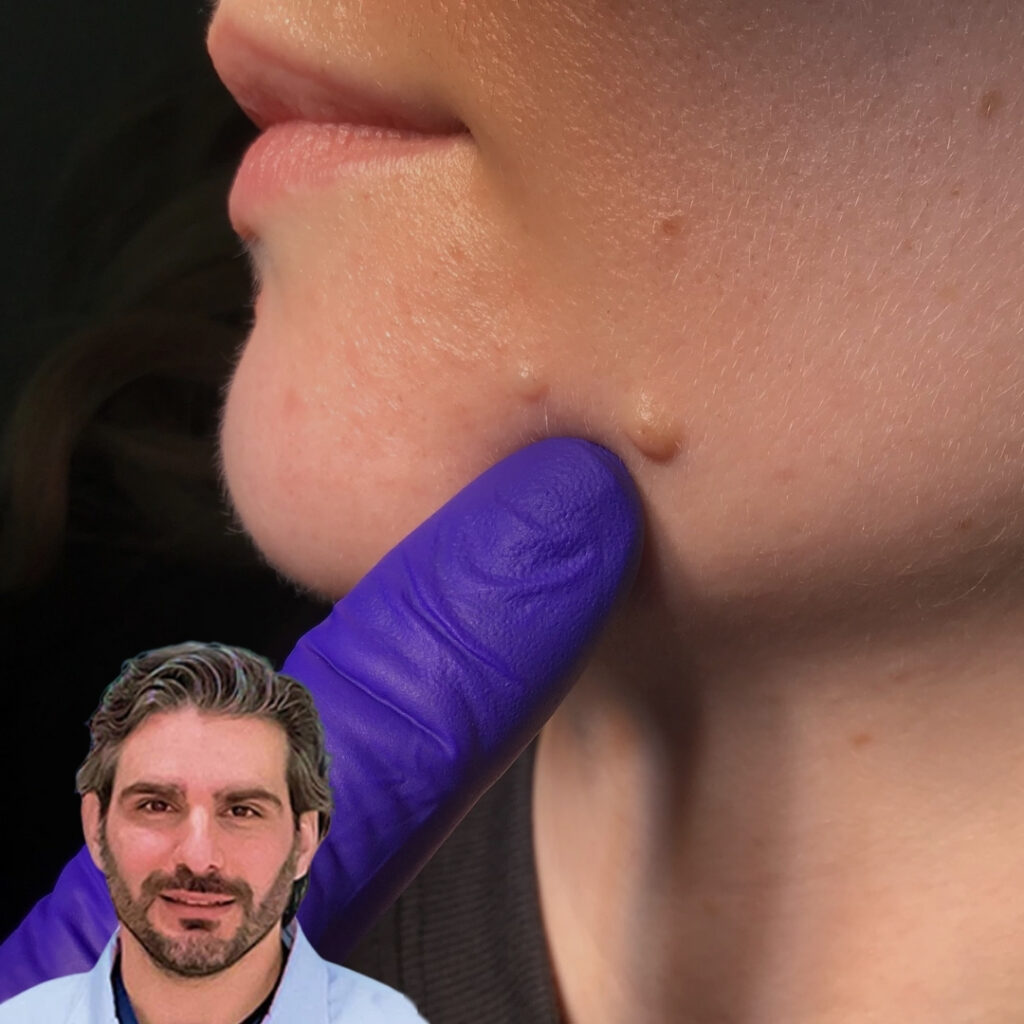
The patient attended our City of London clinic on Queen Street for assessment of two moles along the left jawline. The main concern was their visibility on the face rather than symptoms such as pain or bleeding.
During consultation:
- Both moles were examined clinically
- They appeared benign in nature
- No urgent features were identified
- Removal options were discussed in the context of facial healing and scarring risk
As with all facial lesions, the decision to proceed with removal was based on individual assessment rather than appearance alone.
Choosing shave removal for the face
For some raised, benign-appearing moles on the face, shave removal may be considered an appropriate option. This technique focuses on removing the raised portion of the lesion while limiting disruption to surrounding skin.
In this situation, a shallow shave technique was planned for both jawline moles. The aim was to achieve removal while respecting the natural contours of the face and supporting predictable healing.
Patients are advised in advance that:
- Any skin procedure can leave a mark or scar
- Facial healing varies between individuals
- Final results evolve gradually over time
How the procedure was performed
The procedure was carried out at our Queen Street clinic in the City of London by Georgios Pafitanis, Consultant Plastic Surgeon.
The approach included:
- Local anaesthetic for comfort
- Shallow shave removal of each mole
- Use of hyfrecation (electrosurgical cautery) to control bleeding and treat the base of the lesions
This method allows controlled removal and is commonly used for selected benign facial moles following assessment.
Aftercare and healing on the face
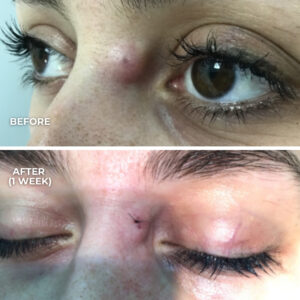
Following facial mole shave removal, patients are given tailored aftercare advice. Healing on the face often progresses well, but outcomes depend on several factors, including skin type and lesion depth.
General considerations include:
- Keeping the area clean during early healing
- Allowing natural scab formation without interference
- Sun protection once healing allows, as UV exposure can affect pigmentation
The appearance of the area continues to change over weeks to months as healing completes.
Why assessment-led removal matters
This example from our City of London Queen Street clinic highlights an important point: facial mole removal is not a one-technique decision. Shave removal may be suitable in some cases, while surgical excision or observation may be more appropriate in others.
A consultation allows:
- Proper assessment of the mole
- Discussion of suitable removal techniques
- Clear explanation of healing and scarring variability
For patients searching for facial mole shave removal in the City of London, this reflects how decisions are made in real clinical settings, carefully, conservatively, and based on individual factors rather than assumptions.