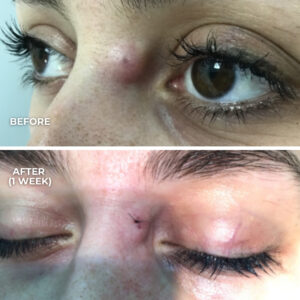
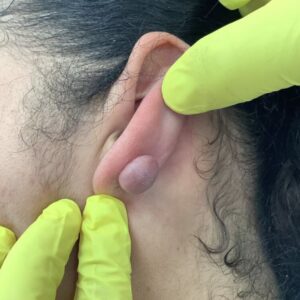
A cyst developing on or near the eyebrow can be worrying, especially when it becomes more visible or starts affecting appearance. In this case, a patient attended City Dermatology Clinic London with a lump on the left brow that had been present for some time. It measured about 1cm, had remained static in size, and showed no signs of infection. On examination, the cyst was found to be very superficial and freely mobile beneath the skin, with no sinister features.
Dr Parviz Sadigh, our consultant plastic surgeon, assessed the lesion and concluded it was most likely a pilomatrixoma, a benign growth arising from hair follicle cells. While pilomatrixomas are harmless, they do not disappear on their own and are best treated through surgical removal if they are visible, bothersome, or causing concern.
What is a Pilomatrixoma?
A pilomatrixoma is a non-cancerous skin tumour that usually develops on the head, face, or upper body. They can occur at any age but are most often seen in children and young adults. The lump tends to feel firm and may slowly increase in size over time. Unlike infected cysts, pilomatrixomas are not painful and do not usually cause redness or discharge.
Because this patient’s cyst removal was close to the surface and almost exposed under the skin, excision was the recommended treatment.
The Removal Procedure
The procedure was carried out under local anaesthetic using Lignospan LA to ensure the patient remained comfortable. Once the area was fully numbed, Dr Sadigh made a small incision and carefully removed the pilomatrixoma in full.

Bleeding was controlled with meticulous haemostasis, and the wound was closed using fine 6-0 Rapide dissolvable stitches. Steri-strips and brown tape were applied to protect the incision and aid healing. The entire process took less than an hour, and the patient was able to leave the clinic the same day.
Recovery and Aftercare
The patient was counselled on the possible outcomes of surgery, including the small chance of recurrence and the risk of visible scarring such as keloid formation. They were advised to monitor the wound closely in the days following surgery and to seek urgent attention if they noticed increasing redness, discharge, or pain.
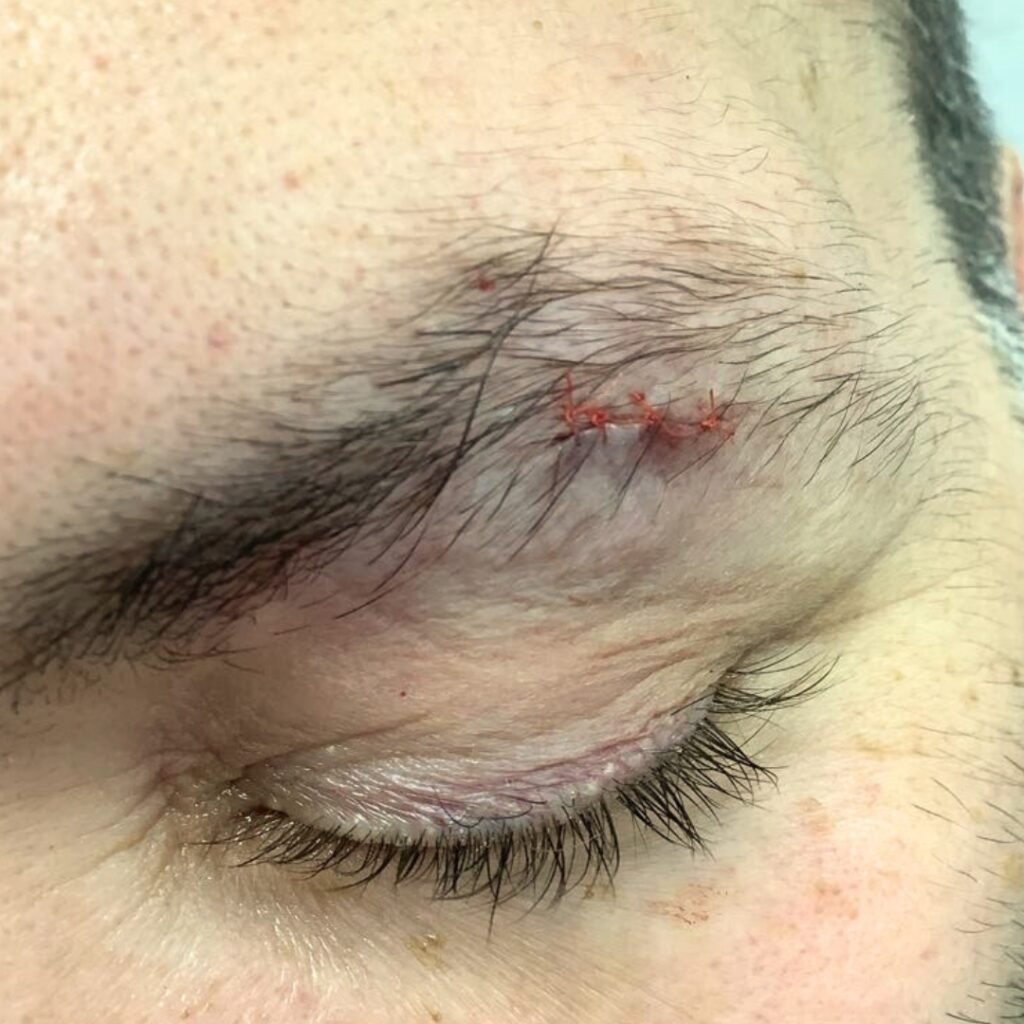
A free follow-up appointment was offered to check healing and address any concerns. With good aftercare, most patients recover quickly, and scars from eyebrow procedures usually blend well into the natural skin crease over time.