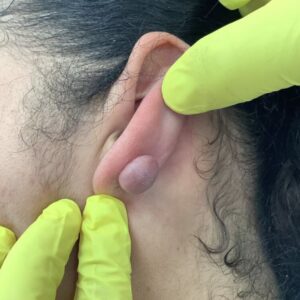
Mole removal is usually not painful. The procedure is performed under local anaesthetic, which numbs the skin so you do not feel pain during removal. Most people describe the experience as pressure or movement rather than discomfort. Any soreness afterwards is typically mild and short-lived.
That simple answer often comes as a relief. However, understanding why mole removal doesn’t usually hurt, and what sensations are normal before, during, and after, helps patients feel far more at ease going into the procedure.
Why People Expect Mole Removal to Hurt
It is natural to assume that anything involving the skin, cutting, or heat will be painful. Skin is visible, sensitive, and closely associated with nerve endings, so people often imagine they will feel everything.
Another reason is exposure to unhelpful information:
- Online videos that show procedures without context
- Stories from decades ago, before modern local anaesthetics were routine
- Confusion between medical mole removal and non-clinical or cosmetic methods
In reality, medical mole removal is a controlled, planned procedure designed to minimise discomfort at every stage.
How Pain Is Controlled During Mole Removal
Pain control is achieved using local anaesthetic, which temporarily blocks nerve signals in a small, targeted area of skin.
What the anaesthetic does
- It numbs only the area being treated
- You remain fully awake and aware
- It begins working within seconds to minutes
- The numbing effect typically lasts one to two hours
What the injection feels like
The anaesthetic injection is usually the most noticeable part of the procedure. Patients commonly describe:
- A brief sharp sting
- Mild burning or pressure for a few seconds
- Rapid numbness afterwards
Once the area is numb, pain should not be felt. If anything sharp or uncomfortable is noticed, additional anaesthetic can be given immediately.
Does Pain Vary by Mole Removal Method?
Different techniques are used depending on the type, size, and location of the mole. While the methods differ, pain levels are generally low across all approaches when performed properly.
Shave removal
This involves removing the mole at skin level.
- Typically feels like pressure or light scraping
- No cutting sensation once numb
- Often minimal soreness afterwards
Surgical excision
This involves removing the mole along with a small margin of surrounding skin, usually followed by stitches.
- Despite sounding more invasive, it is still painless during the procedure
- Patients feel pulling or movement, not pain
- Post-procedure soreness can be slightly more noticeable but remains mild for most people
Laser or other techniques (where appropriate)
- Often accompanied by a warm sensation
- Still performed under local anaesthetic
- Discomfort is generally comparable to other methods
The method used is chosen for safety, diagnostic accuracy, and cosmetic outcome, not pain tolerance.
What You Actually Feel During the Procedure
Understanding the sequence helps remove uncertainty.
Before numbing
- Skin is cleaned
- The anaesthetic injection is administered
- Mild stinging lasts a few seconds
During removal
- The area feels numb and heavy
- You may sense pressure, movement, or vibration
- You should not feel sharp pain
Immediately after
- The area remains numb
- Mild tightness or swelling can occur
- Bleeding is controlled before dressing is applied
If pain is felt at any point, it is not something to “push through.” The procedure can be paused and additional anaesthetic given.
After the Procedure: Pain, Soreness, and Healing
Once the anaesthetic wears off, some awareness of the area is normal.
Typical sensations include:
- Mild tenderness
- A bruised or tight feeling
- Occasional throbbing in the first 24 hours
These symptoms usually settle within a few days.
What is not typical:
- Increasing pain after several days
- Severe or spreading redness
- Pain that interferes with normal movement or sleep
These signs should be assessed to rule out infection or wound issues.
Factors That Can Affect Discomfort
Pain perception varies slightly from person to person, and certain factors can influence how the area feels afterwards.
Location
- Areas under clothing or frequent movement (back, waistline, neck) may feel sorer
- Facial areas often heal quickly with minimal discomfort
Size and depth
- Larger or deeper moles may cause slightly more post-procedure tenderness
Individual sensitivity
- Some people are naturally more sensitive to procedures or injections
Anxiety and tension
- Anticipation and muscle tension can heighten discomfort
- Clear explanation and reassurance often reduce perceived pain significantly
Managing Pain and Comfort After Mole Removal
Most patients do not need pain relief beyond basic care.
General comfort measures
- Keep the area clean and dry
- Avoid friction or pressure on the site
- Follow dressing and wound care instructions carefully
Pain relief
- Paracetamol can be used if needed
- Anti-inflammatory medication is rarely required unless advised
- Ice packs may help with swelling in the first day
Pain that worsens rather than improves should always be reviewed.
Pain vs Risk: Why Proper Medical Removal Matters
Some people consider non-medical or DIY removal methods to avoid a clinic visit. These approaches often result in:
- More pain
- Poor wound healing
- Infection or scarring
- Missed diagnosis of concerning skin lesions
Medical mole removal is not just about comfort—it is about safety, accuracy, and appropriate aftercare. Proper assessment ensures the mole is removed in the least traumatic way possible, both physically and medically.