A skin biopsy is a diagnostic procedure in which a small sample of skin tissue is removed and sent for laboratory analysis. It is most commonly used to investigate suspicious moles, rashes, or lesions when visual examination alone cannot provide a definitive diagnosis. Private dermatology clinics in London typically offer faster access to biopsy procedures and results compared to NHS pathways, though suitability is assessed during an initial consultation.
City Dermatology Clinic operates from Harley Street and the City of London, providing access to consultant dermatologists and plastic surgeons for skin biopsy and diagnostic assessment.
When a Biopsy May Be Recommended
A dermatologist may recommend a skin biopsy if:
- A mole or lesion shows concerning features during visual examination or dermoscopy
- A rash or skin condition has not responded to initial treatment and requires definitive diagnosis
- There is diagnostic uncertainty that cannot be resolved without tissue analysis
- A growth or patch of skin has changed in appearance, size, or texture
- Previous test results were inconclusive and further investigation is needed
Not all suspicious lesions require a biopsy. Some may be monitored over time, photographed for comparison, or removed entirely without prior biopsy if the clinical assessment suggests this is appropriate.
At City Dermatology Clinic, consultant dermatologist Dr Andreea Anton and colleagues conduct approximately 20 skin cancer screening consultations each month, alongside assessment of moles and lesions where biopsy or removal may be indicated. Over 1,400 mole removal procedures have been performed since 2023, with biopsy forming part of the diagnostic pathway where clinical features warrant tissue analysis.
Suitability for biopsy is determined during a consultation. Factors such as lesion location, patient medical history, and the urgency of diagnosis all influence the decision.
Types of Skin Biopsy
There are three main biopsy techniques, each suited to different clinical situations:
Punch Biopsy
A circular blade removes a small cylindrical core of tissue, usually 2–4mm in diameter. This method is often used for diagnosing rashes, inflammatory conditions, or small suspicious lesions. The wound may be closed with a suture or left to heal naturally depending on size and location.
Shave Biopsy
A thin horizontal slice of tissue is removed using a surgical blade. This technique is typically used for raised lesions where full-thickness sampling is not required. The wound is usually left to heal without sutures, though bleeding is controlled with cautery or a topical agent.
Excisional Biopsy
The entire lesion is removed along with a margin of surrounding tissue. This is both a diagnostic and therapeutic procedure, as it removes the area of concern entirely. The wound is closed with sutures. Excisional biopsy is often preferred for lesions where malignancy is suspected.
At City Dermatology Clinic, biopsies and excisions are performed by consultant plastic surgeons including Mr Parviz Sadigh, Mr Reza Alamouti, and Dr Jana Torres-Grau, as well as dermatologists depending on the complexity and location of the lesion.
The choice of biopsy type depends on the lesion’s characteristics, location, and the information required for diagnosis. A dermatologist will explain which method is appropriate during the consultation.
The Private Biopsy Process: Consultation to Results
Initial Consultation
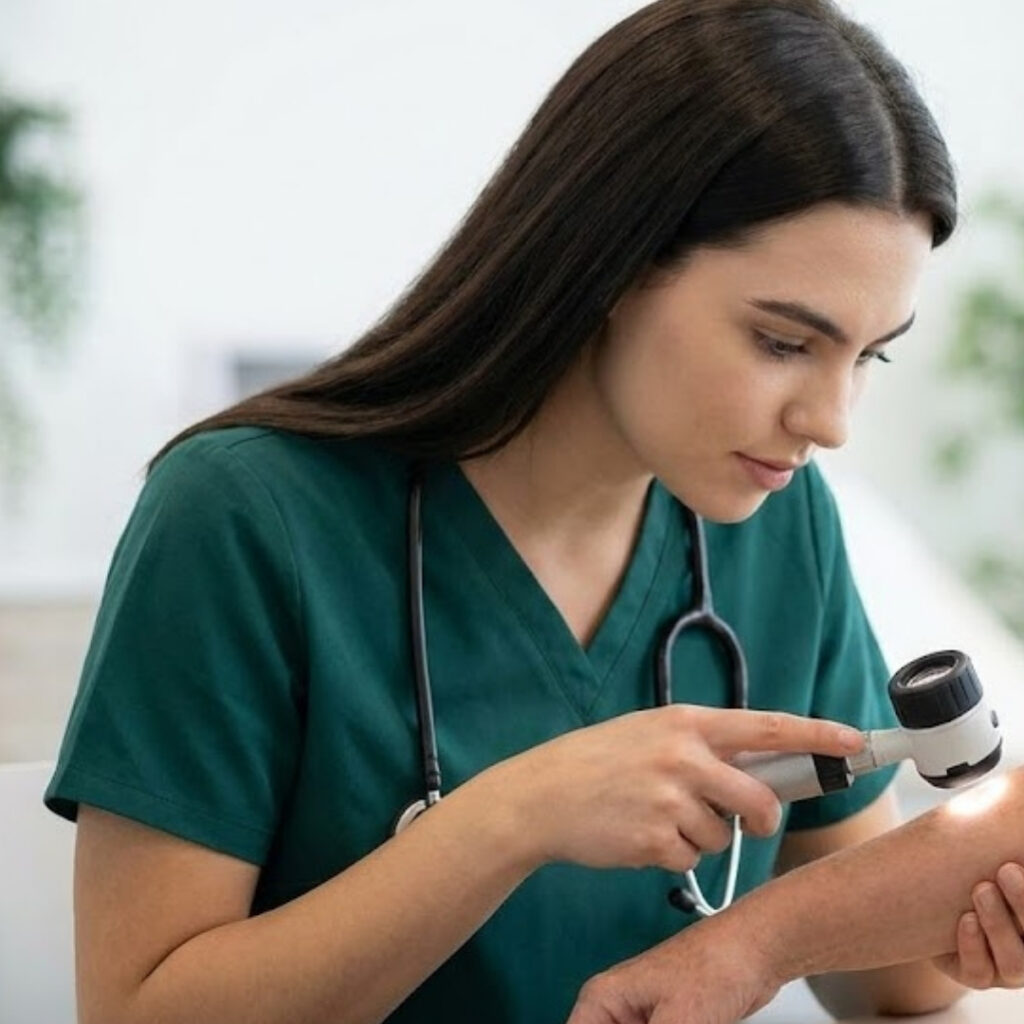
The first step is a dermatology consultation, during which the clinician examines the area of concern. Dermoscopy (magnified skin examination) may be used to assess features not visible to the naked eye.
The dermatologist will discuss:
- Whether a biopsy is clinically necessary
- Which biopsy technique is most appropriate
- What the procedure involves
- Likely recovery and scarring
- How and when results will be provided
If a biopsy is recommended and the patient agrees, it may be performed on the same day or scheduled for a later appointment depending on clinic availability and patient preference.
The Biopsy Procedure
The skin is cleaned and local anaesthetic is injected into the area. The biopsy is then performed using the chosen technique. Bleeding is controlled, and the wound is dressed. The tissue sample is placed in a preservative solution and sent to a histopathology laboratory.
Patients can usually leave immediately after the procedure and resume most normal activities, though strenuous exercise or activities that may disrupt the wound are typically avoided for a few days.
Laboratory Analysis
The tissue sample is processed and examined under a microscope by a consultant histopathologist. This involves preparing thin slices of tissue, staining them, and analysing cellular structure and features.
In private pathways, results are typically available within 7 to 10 working days, though this can vary depending on the complexity of the case and whether additional specialist review is required.
Results Discussion
Results are communicated during a follow-up consultation, either in person, by telephone, or via a secure patient portal depending on clinic practice and patient preference.
The dermatologist will explain the findings and, if necessary, discuss further treatment options. If the biopsy confirms a benign condition, no further action may be needed. If a concerning diagnosis is made, the clinician will outline next steps, which may include additional procedures, referral to a specialist, or ongoing monitoring.
Timeframes: How Long Each Stage Takes
Private dermatology services in London typically offer the following approximate timeframes, though these vary between clinics:
| Stage | Typical Timeframe |
|---|---|
| Initial consultation booking | Within 1–7 days of enquiry |
| Biopsy procedure (if same-day) | During the same consultation |
| Biopsy procedure (if scheduled separately) | Within 1–2 weeks of consultation |
| Results available | 7–10 working days after biopsy |
| Follow-up consultation | Within 1–2 weeks of results being available |
These are general estimates. Urgent cases may be prioritised, and complex pathology may take longer to analyse.
Patients seeking faster access to biopsy and results compared to NHS pathways often find private care reduces waiting times, though individual circumstances vary.
What Biopsy Results Show
Histopathology reports provide information about:
- The type of cells present in the tissue sample
- Whether abnormal or cancerous cells are identified
- The extent and severity of any disease process
- Recommendations for further investigation or treatment if required
Results may confirm:
- Benign conditions (non-cancerous growths, inflammatory skin diseases, infections)
- Pre-cancerous changes (such as actinic keratosis or dysplastic naevi)
- Malignant conditions (basal cell carcinoma, squamous cell carcinoma, melanoma, or rarer skin cancers)
- Inconclusive findings requiring repeat biopsy or additional testing
Not all biopsies provide a definitive diagnosis. In some cases, the sample may be insufficient, or the findings may require correlation with clinical features and further investigation.
Costs and What’s Included
Private skin biopsy costs in London typically include:
- Initial dermatology consultation
- The biopsy procedure itself (including local anaesthetic and wound dressing)
- Histopathology laboratory analysis
- Follow-up consultation to discuss results
Additional costs may apply for:
- Suture removal (if required and not included in aftercare package)
- Further treatment following diagnosis
- Repeat biopsy if initial sampling is inconclusive
Consultation fees generally range from £150 to £300. Biopsy procedure costs vary depending on complexity and technique but are often in the range of £300 to £600. Histopathology fees are usually included but may be itemised separately in some clinics.
It is advisable to confirm what is included in the quoted price during the initial enquiry. Some clinics offer package pricing covering consultation, biopsy, and results discussion.
Private medical insurance may cover diagnostic procedures if clinical criteria are met, though this depends on policy terms.
Recovery and Aftercare
Recovery depends on the biopsy type and location.
Immediate Aftercare
- Keep the wound clean and dry for 24–48 hours
- Avoid strenuous activity that may cause bleeding or wound disruption
- Mild discomfort and localised bruising are common and resolve within a few days
- Pain can usually be managed with over-the-counter paracetamol if needed
Wound Healing
| Biopsy Type | Healing Time | Scarring |
|---|---|---|
| Punch biopsy (sutured) | 10–14 days for suture removal; 4–6 weeks for full healing | Small circular scar, size depends on punch diameter |
| Shave biopsy | 7–14 days | Flat or slightly depressed scar, often less visible than sutured wounds |
| Excisional biopsy | 10–14 days for suture removal; 6–8 weeks for full healing | Linear scar, length depends on lesion size |
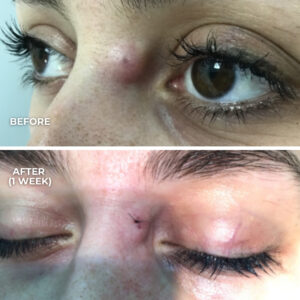
Scarring varies between individuals and is influenced by factors including skin type, lesion location, and healing response. Facial wounds often heal with less visible scarring than those on the trunk or limbs, though individual variability is significant.
City Dermatology Clinic conducts over 40 wound check appointments each month as part of routine aftercare following biopsy and surgical procedures. Suture removal appointments are scheduled approximately 10–14 days after the procedure depending on the site.
When to Seek Advice
Contact the clinic if:
- The wound becomes increasingly painful, red, or swollen
- There is discharge, pus, or an unpleasant odour
- Bleeding persists or restarts after initial control
- Sutures come loose or the wound edges separate
Most biopsy sites heal without complication, but infection or delayed healing can occur in a small proportion of cases.
When Private Care May Be Appropriate
Patients may consider private dermatology services for skin biopsy if:
- Faster access to consultation and results is a priority
- NHS waiting times do not align with clinical or personal circumstances
- Continuity of care with a single consultant is preferred
- Private medical insurance covers the procedure
- A second opinion or specialist dermatopathology review is sought
Private care does not replace urgent NHS referrals for suspected serious conditions. If a GP has made an urgent referral, this should be followed unless advised otherwise by a clinician.
City Dermatology Clinic operates from two central London locations: Harley Street (W1) and the City of London (EC2), both accessible via multiple transport links. Patients can attend either clinic depending on convenience and clinician availability.