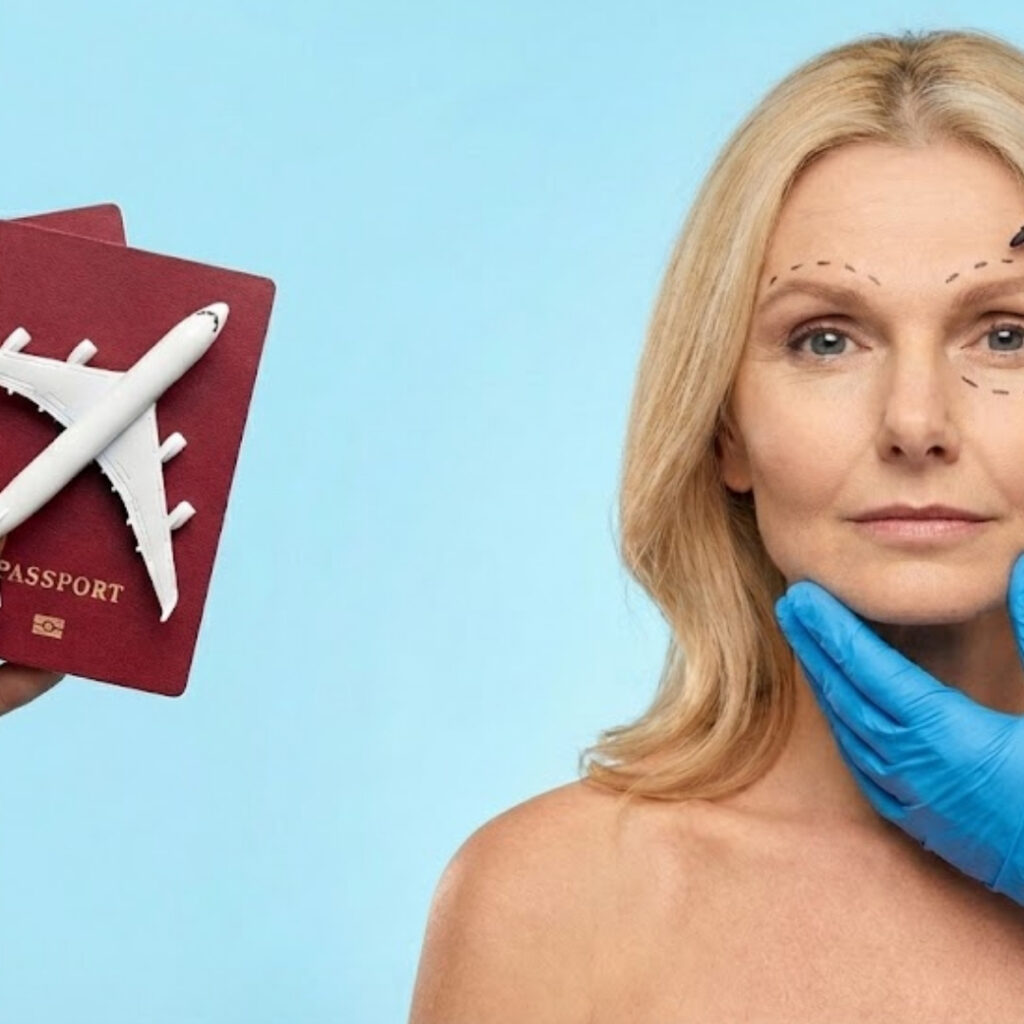
Imagine a “cosmetic package holiday” – flying off to Turkey for a cut-price breast enlargement or tummy tuck, then returning home with a suitcase of photos and… complications. In reality, many Britons coming back from cheap cosmetic surgery abroad end up in NHS hospitals. Recent research suggests over half of these medical tourists suffer problems like severe infections or non-healing wounds. The NHS then has to “pick up the pieces”, often at great cost. Official studies show each case can cost the NHS thousands – in one review as much as £19,500 per patient. How did bargains turn into a public-health headache, and what should prospective patients know?
Surge in Cosmetic Tourism
Cheap flights, low prices and slick social media ads have driven a boom in cosmetic tourism. In 2022, at least 348,000 UK residents travelled abroad for medical treatment. That number jumped to an estimated 431,000 in 2023, according to the UK’s Office for National Statistics. Around 90% of these medical tourists are women in their 30s. The most popular destination by far is Turkey (accounting for 60–75% of trips), with many clinics offering all-inclusive “surgery and holiday” packages.
Patients cite cost savings, quick appointments and social-media endorsements. As one industry figure noted, “the demand for aesthetic procedures is largely social media driven… often supported by celebrities, upon which misleading advertising then capitalises”.
Compared with the UK, surgery prices can indeed seem spectacularly low. But experts warn the catch is safety and follow‑up care. Clinics abroad may skimp on pre-op counselling or post-op support, assuming patients will fly home immediately. UK specialist surgeons have repeatedly warned that flying soon before or after major surgery raises serious risks. For example, both air travel and surgery independently raise the chance of deep vein thrombosis (DVT) or pulmonary embolism – and combining them can be dangerous if not managed carefully. A UK patient planning a tummy tuck abroad should ideally wait 7–10 days before flying home to reduce these risks. Many patients do not follow such advice, increasing the chance of life‑threatening clots.
On the ground in Turkey or Eastern Europe, regulation can also be patchy. In the UK, surgeons must be on the GMC’s specialist register and face strict infection-control checks. Abroad, standards vary. “Other countries use different systems,” notes the British Association of Plastic, Reconstructive and Aesthetic Surgeons (BAPRAS). A UK patient has the right to inspect hospital infection rates and surgeon credentials; abroad, those checks are often harder. UK plastic surgeons provide full aftercare built into the cost – overseas clinics often promise no further help once you return. Patients may find they have to handle serious problems on their own, until an NHS doctor is forced to intervene.
When Things Go Wrong
Cut-price surgery trips can go badly wrong. The complications are wide-ranging: wound infections, tissue necrosis, uncontrolled bleeding, and deep wounds that fail to heal are common. Some patients develop dangerous wound dehiscence (surgical incisions coming apart) or need emergency re-surgery to fix botched implants. One UK hospital surgeon describes a recent case: a woman returned from Turkey after a tummy tuck and liposuction, flying into emergency sepsis mid-flight. Back home, she had two litres of pus drained from her abdomen and weeks of intensive wound care. These complex cases tie up NHS intensive care beds and tissue‑viability teams for weeks.
Studies confirm this pattern. In a Wales-led review of medical-tourism research, up to 53% of returned patients had moderate-to-severe complications. Complications often appear quickly – most present within 8 weeks of surgery. For example, one UK breast unit found that 20 of 25 patients needing corrective surgery had just come back from Turkey with infected breast implants or abdominal wounds. Another NHS center in Scotland saw 78% of its cosmetic complications (mostly breast augments and abdominoplasties) come from overseas operations.
These complications are not just clinical headaches but human tragedies. One BAAPS case study tells of Judy Willis, a 54-year-old who paid £8,000 in Turkey for a facelift. It “went disastrously wrong,” leaving her face disfigured. Over the next 16 months she endured £30,000 in corrective surgeries, all paid out of pocket. “If someone had told me how much the decision to go to Turkey could have cost me financially, physically and emotionally I would never have got on that plane,” she said. Many patients share similar horror stories, some with scars or disabilities that last a lifetime.
Rising NHS Costs
All these extra treatments cost the NHS dearly. Hospital stays, antibiotics, additional surgeries and nursing care add up. Research shows the per-patient NHS bill can be enormous. The Wales review found cases costing from £1,058 up to £19,549 per patient. The BAAPS, in its own audit, estimates an average of about £15,000 per patient needing emergency aftercare for surgery abroad gone wrong. Even small case series rack up big totals. A Scottish study of 81 returned patients over five years calculated a £755,560 total burden on NHS Scotland – roughly £9,328 per patient. (These were mostly wound-care expenses for severe infections and dehiscence.) In one English breast unit, 25 returned cases cost the NHS over £37,000 in combined treatments.
These costs occur at a time when the NHS is already under intense financial and staffing pressures. As Prof. Vivien Lees of the Royal College of Surgeons warns, “the NHS is left to pick up the pieces, often in emergencies and without full information about what surgery was done or by whom”. Every operating theatre hour and hospital bed devoted to treating these complications is one less available for trauma or cancer cases. Plastic surgeons worry that rising numbers of cosmetic-tourism patients lengthen waiting times for NHS-funded procedures: when an urgent case returns mangled, elective cancer reconstructive work might be delayed.
Voices from Surgeons and Regulators
Senior surgeons and officials are speaking out. The President of the Royal College of Surgeons’ English arm bluntly says it “should not be the role of the NHS to routinely mop up the mistakes of private providers overseas”. NHS England’s medical director, Prof. Sir Stephen Powis, has noted the most extreme example: Brazilian butt lifts have the highest death rate of any cosmetic procedure. He warned, “It is not fair that the NHS is left to pick up the pieces of botched Brazilian butt lifts… the NHS then has to repair the damage, landing taxpayers with a hefty bill too. NHS resources are precious, and I’d urge anyone considering a BBL to think twice before taking up an offer that seems too good to be true.”
At the same time, politicians are trying to keep Britons safe. Health Secretary Wes Streeting has publicly urged caution: “My strong advice to British travellers is, if the offer looks too good to be true, I suspect it is too good to be true,” he said, cautioning that cheap procedures can have consequences “for years to come”. The government has funded public‑awareness campaigns (even on TikTok) warning would-be patients about the risks. Medical regulators and advertising watchdogs are also acting: in early 2024 the Advertising Standards Authority banned over a dozen foreign clinic ads in the UK for misleading claims about safety and results. However, large tourism expos still operate with virtually no health oversight – something BAAPS leaders call “truly remarkable”.
Plastic surgeons are emphasizing patient education. BAAPS notes that even if you fly back with life-threatening complications, only emergency care is guaranteed by the NHS – any further cosmetic correction likely won’t be funded. One BAPRAS consultant bluntly explains the downside: “If something goes wrong with your body, you can’t get it fixed by your local electrical retailer… you’ve got one shot at it, and if it goes wrong, you’ve got no redress,” except perhaps the NHS treating an emergency. BAAPS and BAPRAS both stress that knowing your surgeon’s credentials and asking about aftercare are vital steps before booking a foreign procedure.
What Patients Should Consider
Before hopping on a flight for a cosmetic bargain, patients need to do their homework. The fact is, cheap surgery abroad may not be cheaper in the long run. For those tempted, surgeons and regulators recommend considering the following:
- Surgeon qualifications: Always verify the surgeon’s training. In the UK, plastic surgeons are on the GMC’s specialist register. Abroad, the rules vary and good credentials can be hard to check. Ask about their board membership, how many similar surgeries they’ve done, and don’t hesitate to confirm their qualifications and experience.
- Clinic regulation and safety: UK private hospitals are regularly inspected by the Care Quality Commission. Ask overseas clinics to prove their licensing, infection rate records, and emergency backup plans. Remember that standards differ across countries. If no clear answer comes, treat that as a red flag.
- Aftercare arrangements: You should have a clear plan for follow-up care. UK surgeons include post-op visits in their fees; many overseas clinics do not. Clarify whether the clinic or surgeon will assist you once you’re back home – or if you’ll have to organize private care yourself for any complications.
- Insurance and travel logistics: Standard travel insurance usually won’t cover elective surgery complications. If things go wrong, you may need a medical evacuation or prolonged hospitalisation that you must pay for. Factor in additional travel, accommodation, and work‑leave costs.
- Understand NHS coverage: The NHS will treat life‑threatening emergencies free of charge – but it won’t pay for routine cosmetic revisions. As one adviser puts it, “any other problems may have to be covered by you”. In practice, that means if your implants fail or you need scar revision, you may have to pay privately.
- Beware “too good to be true” deals: If a surgery package seems extremely cheap, consider why. It could mean shortcuts on care. Health Secretary Streeting’s advice still rings true: “Think very carefully before accessing those cosmetic treatments that are currently being marketed at rock‑bottom prices.”
Cosmetic surgery is a serious decision – overseas or at home. Patients have one life to get it right, and it’s better to ask plenty of questions before taking the risk. While the NHS will step in to save lives, it cannot guarantee to fix every botched cosmetic procedure without cost. By weighing all the information and costs (both known and hidden), individuals can make an informed choice. Remember: there are no bargains when it comes to your health and safety.