A cyst on the glabella (the area between the eyebrows) can cause localised swelling and discomfort. In some cases, inflammation may extend to the nearby eyelid. When a cyst becomes painful, red, or filled with pus, a minor procedure called incision and drainage may be considered.
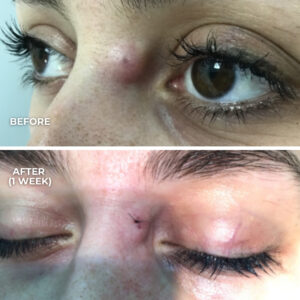
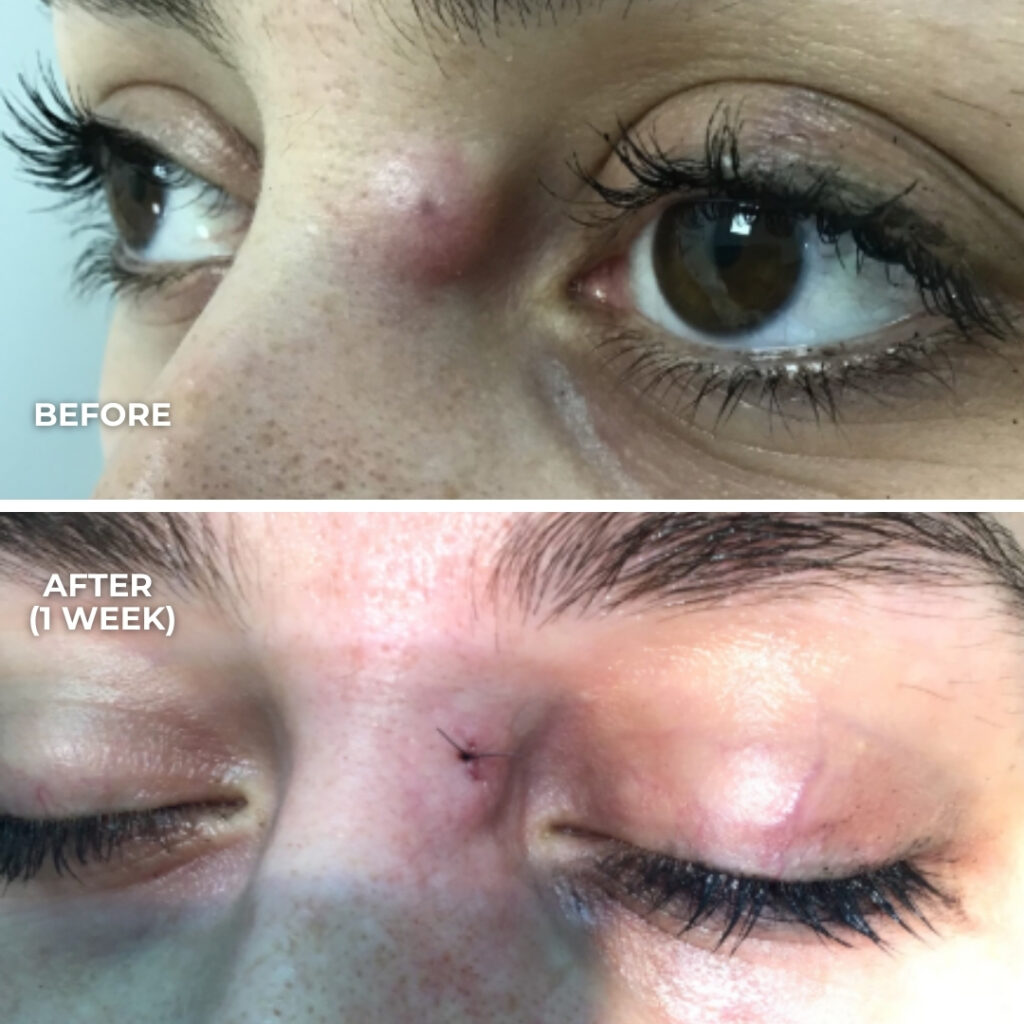
This article explains what incision and drainage involves, using a recent example of a cyst on the left glabella associated with swelling of the lower eyelid.
What Is a Glabellar Cyst?
The glabella is the smooth area of skin between the eyebrows, just above the nose. Cysts in this region are usually benign, meaning they are not cancerous.
They may develop due to blocked hair follicles or trapped skin cells. When inflamed or infected, a cyst can become swollen, tender, and filled with pus.
Swelling may extend to the eyelid because the tissues of the face are closely connected.
When Is Incision and Drainage Considered?
Incision and drainage may be appropriate when:
- The cyst is painful or inflamed
- There is visible pus
- The area is tense and swollen
- Eyelid swelling is developing due to nearby inflammation
Suitability is confirmed during consultation. Not all cysts require immediate drainage, and some may need antibiotic treatment first depending on the degree of inflammation.
How the Procedure Is Performed
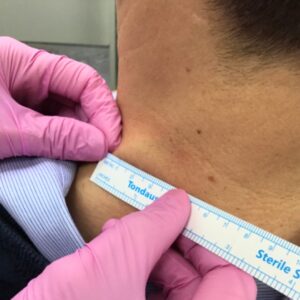
In this case, the cyst measured approximately 1 cm.
The procedure was performed using aseptic technique to reduce infection risk.
Step-by-step overview:
- Local anaesthetic
A small amount (0.2 ml) of Lidocaine 2% was injected to numb the area. - Incision
A small incision was made over the most visible part of the lump. - Drainage
Pus was released from the cavity.
No visible capsule was identified at the time of drainage. - Irrigation
The cavity was washed with a saline–iodine solution to reduce bacterial load. - Closure
The incision was closed using Ethilon 5-0 sutures. - Dressing
A sterile plaster was applied.
The procedure is typically performed under local anaesthetic and usually takes a short time.
Why the Capsule May Not Be Removed
When a cyst is inflamed or actively infected, complete capsule removal is not always possible or advisable during the initial drainage.
The priority in this setting is:
- Relieving pressure
- Draining infected material
- Reducing swelling
Definitive excision of the cyst capsule may be considered later if recurrence occurs.
Recovery and Follow-Up
In this case:
- Sutures were removed (R.O.S – Removal of Sutures) after one week
- Before-and-after images documented healing progress
Aftercare typically includes:
- Keeping the area clean and dry
- Avoiding pressure on the site
- Monitoring for redness, increasing pain, or discharge
Healing time varies between individuals. Swelling around the eyelid usually improves once the underlying inflammation settles.
Risks and Considerations
As with any minor surgical procedure, potential risks include:
- Bleeding
- Infection
- Scarring
- Recurrence of the cyst
- Asymmetry or contour irregularity
Scarring is possible whenever the skin is incised. The appearance of any scar depends on individual healing and skin type.
Will the Cyst Come Back?
Incision and drainage relieve the immediate symptoms, but recurrence can occur if the cyst lining remains.
If the cyst reforms after inflammation settles, a formal surgical excision may be discussed during consultation.
When to Seek Assessment
You should seek clinical assessment if:
- A cyst becomes painful or rapidly enlarges
- There is spreading redness or eyelid swelling
- Vision changes occur
- You are unsure whether the lump is a cyst
A clinician can assess the area and explain appropriate management options.
FAQs
Is drainage the same as cyst removal?
No. Drainage releases pus and reduces pressure. Full removal involves excising the cyst capsule and is usually performed when inflammation has settled.
Will there be a scar?
Any incision can leave a scar. The size and appearance vary between individuals.
How soon are stitches removed?
In facial areas, sutures are often removed after about 5–7 days, depending on healing.