Popping a cyst at home can feel like a quick fix, but it often makes the situation worse. Once a cyst is squeezed, bacteria can enter the opening, leading to redness, swelling, and infection. At City Dermatology Clinic in Harley Street and Queen Street, London, our experienced team, including Dr Parviz Sadigh, Dr Amir Sadr, and Dr Jana Torres-Grau, treat hundreds of infected cysts every year, providing safe, sterile procedures to stop the infection and prevent it coming back.
Why Popped Cysts Get Infected
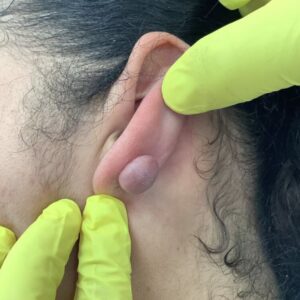
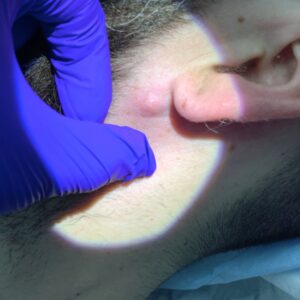
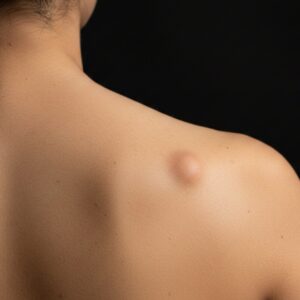
A cyst is a sac filled with keratin, oil, or other natural substances under the skin. When popped at home, the sac is rarely removed completely, leaving an opening where bacteria can easily enter.
This often leads to:
- Local infection, with pain, redness, and swelling
- Formation of an abscess
- Longer healing time or visible scarring
Signs of an Infected Cyst
After popping a cyst, keep an eye out for signs of infection, including:
- Redness and swelling around the area
- Increasing pain or tenderness
- Warmth in the skin
- Pus or yellow discharge
- Fever or feeling generally unwell (a sign the infection is spreading)
What to Do if Your Cyst Gets Infected
Keep the area clean
Wash gently with mild soap and water twice a day. Avoid scrubbing or picking.
Apply a warm compress
A clean, warm compress can ease pain and encourage drainage if an abscess is forming.
Avoid squeezing or pressing the cyst again
This pushes bacteria deeper into the skin, making the infection worse.
Use over-the-counter pain relief
Paracetamol or ibuprofen can reduce discomfort, but these won’t treat the underlying infection.
When to See a Doctor
If your cyst is showing signs of infection, it’s time for professional care. At City Dermatology Clinic in Harley Street and Queen Street, our dermatology team can:
- Assess the area quickly
- Drain the infection safely under sterile conditions
- Provide targeted antibiotic treatment if required
Seek urgent medical help if you notice:
- Rapidly increasing pain or swelling
- Redness spreading across the skin
- Fever, chills, or flu-like symptoms
- Repeated infections in the same area
Safe Treatment Options
Our doctors, including Dr Parviz Sadigh, Dr Amir Sadr, and Dr Jana Torres-Grau, perform the following treatments on-site for fast relief and safe healing:
- Incision and drainage: The cyst is safely opened, cleaned, and dressed to reduce infection and pain.
- Antibiotics: Oral or topical antibiotics help clear the infection and stop it from spreading.
- Complete cyst removal: Once the infection has resolved, the entire cyst sac can be removed in a short procedure to prevent it returning.
Preventing Future Problems
- Avoid popping or squeezing cysts at home
- Book early removal for cysts before they become inflamed
- Maintain good skin hygiene, particularly if you’re prone to oily or acne-prone skin