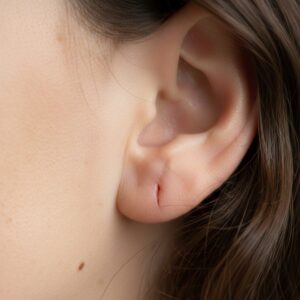
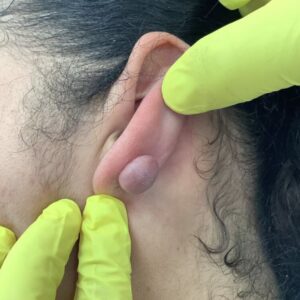
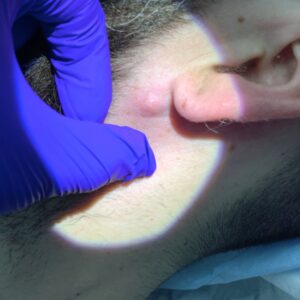
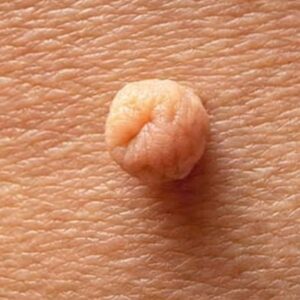
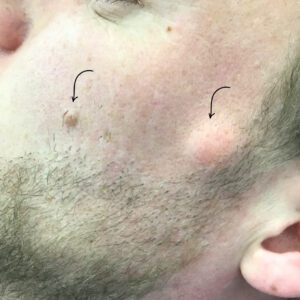
Keloids are raised, thickened scars that grow beyond the boundary of the original wound. They can form anywhere on the body, but are commonly seen on the ears after piercings, injuries, or minor procedures. In this case, a patient presented with a small keloid behind the left ear lobe that had been present for around two years. They had not tried any previous treatment and were keen to have it removed.
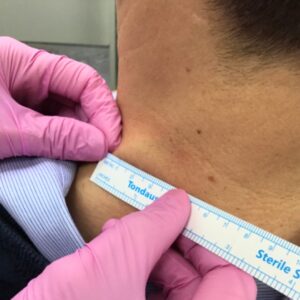
On examination, the keloid measured approximately 1cm. While harmless, keloids can cause discomfort and affect appearance, leading many patients to seek treatment.
What is a Keloid?
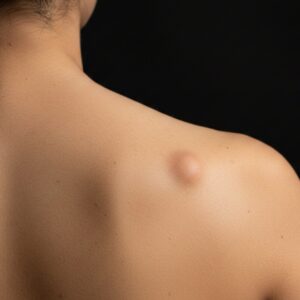
A keloid is a type of scar that results from an overgrowth of tissue during the healing process. Unlike normal scars, keloids do not regress over time and may continue to grow. They are more common in younger patients and those with a family history of keloid formation. Because keloids have a high recurrence rate, treatment often involves a combination approach rather than surgery alone.
The Surgical Procedure
The keloid removal procedure was performed under local anaesthetic using Lignospan LA. An intralesional debulking technique was used to carefully remove the bulk of the keloid tissue while preserving healthy surrounding skin. Once the keloid was reduced, haemostasis was achieved and the incision was closed with fine dissolvable stitches (5-0 Rapide). Brown tape dressings were applied to support healing.
The patient tolerated the procedure well and was able to leave the clinic the same day.
Aftercare and Ongoing Treatment
Because of the tendency for keloids to return, further management is important. In this case, the patient was advised to return in 4–6 weeks for steroid injections into the scar tissue. Steroids help reduce inflammation, flatten the scar, and lower the risk of recurrence.

Patients are also advised to monitor the area closely and seek review if the scar becomes red, itchy, or begins to thicken again. With combined treatment, most patients achieve a much flatter, less noticeable scar.