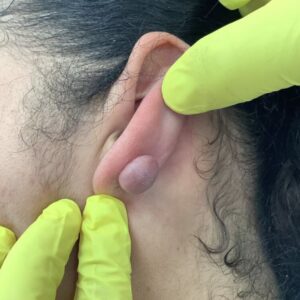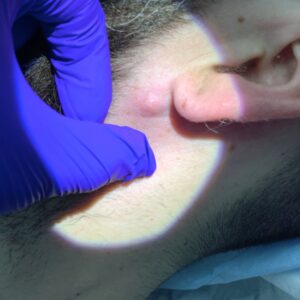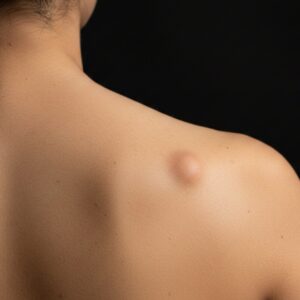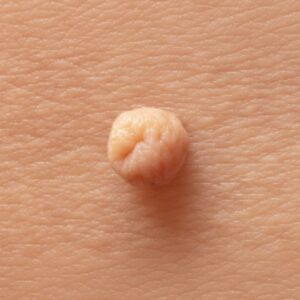
This article documents a real clinical case of keloid scar excision on the chin, focusing on surgical decision-making, risk discussion, operative technique, and aftercare. It reflects how keloid scars are managed in practice rather than in theory.
The keloid removal procedure was performed by Dr Sarah Al-Himdani, Consultant Plastic Surgeon, following in-person assessment and informed consent.
Clinical Background
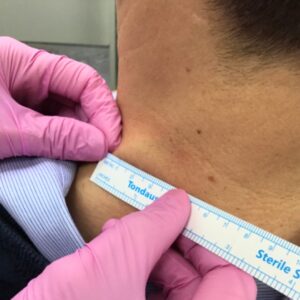
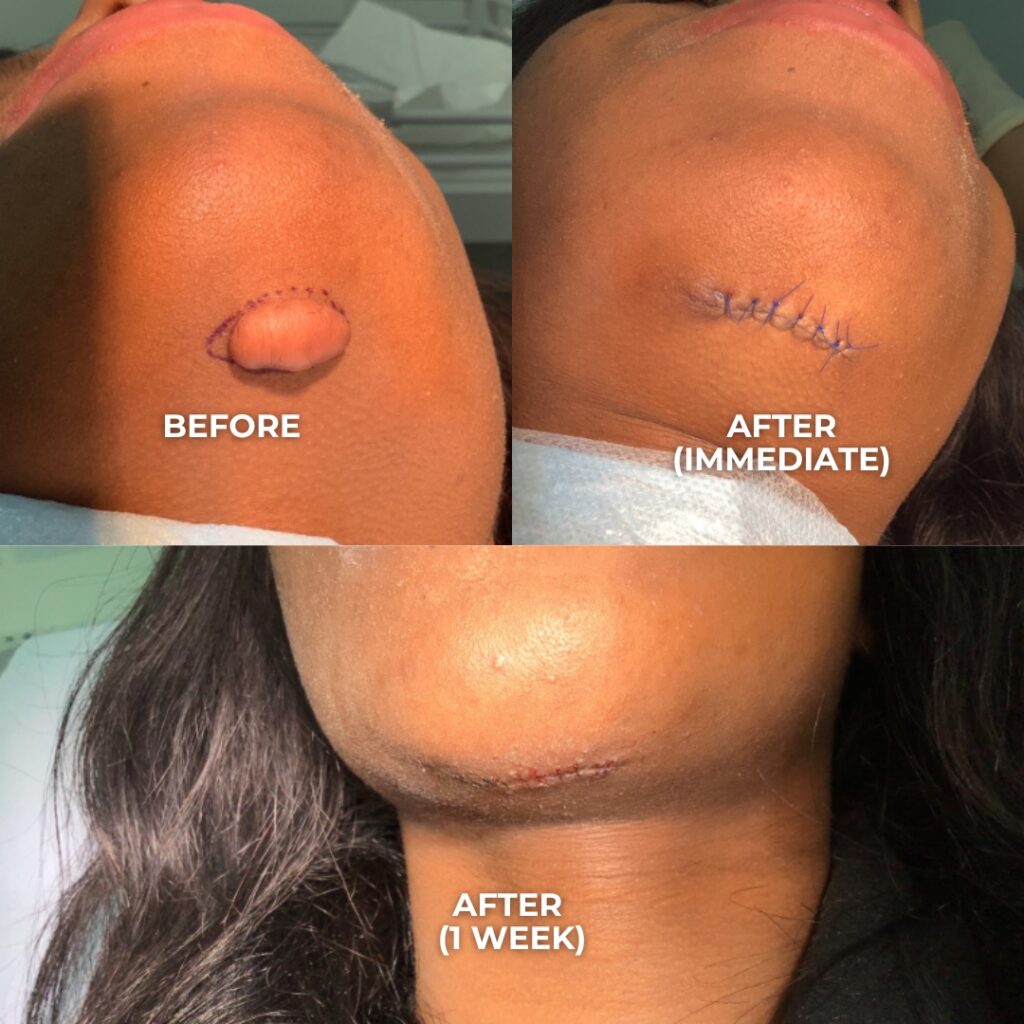
The patient presented with a single keloid scar on the chin, measuring approximately 1.5 × 1 cm. The scar developed several months after prior chin surgery performed elsewhere. There were no signs of implant-related complications or infection at the time of assessment.
The patient had previously undergone steroid injection treatment, with limited improvement. On examination, the scar was consistent with a mature keloid rather than a hypertrophic scar.
Assessment and Treatment Decision
During consultation, the following points were discussed in detail:
- Confirmation that the lesion was clinically consistent with a keloid scar
- Review of previous treatments and response
- Explanation that keloid excision carries a recognised recurrence risk, commonly quoted at 30–50%
- Discussion that recurrence may be similar in size or, in some cases, more pronounced
- Clarification that non-surgical options remain limited once a keloid is established
After considering the risks, alternatives, and uncertainty of outcome, the patient elected to proceed with surgical excision.
Surgical Procedure
The procedure was carried out under local anaesthetic in a clinical setting.
Key operative steps included:
- Careful infiltration of local anaesthetic
- Complete excision of the keloid scar
- Meticulous haemostasis
- Layered wound closure using absorbable deep sutures and fine superficial sutures
- Application of steristrips and supportive tape to reduce tension
Given the history and appearance, the option of histological examination was discussed to confirm the diagnosis and exclude alternative pathology.
Immediate Post-Operative Management
Post-procedure instructions were provided verbally and in writing, including:
- Keeping the dressing dry for the initial period
- Gradual return to normal washing
- Maintaining supportive taping for several weeks to reduce tension across the scar
- Planned review for wound assessment and suture removal
The patient was advised on warning signs such as increasing redness, pain, discharge, or swelling, and how to seek urgent review if needed.
Follow-Up and Recurrence Prevention
Given the known behaviour of keloid scars, follow-up planning was an important part of management.
The patient was advised on:
- Prolonged taping to support scar maturation
- Introduction of silicone gel or silicone sheets once healing allowed
- The possibility of further treatment if early signs of recurrence developed
Open follow-up was arranged so concerns could be reviewed promptly without delay.
Why This Case Matters
This case illustrates several key realities of keloid surgery:
- Surgical excision is not a guaranteed solution
- Risk discussion is central, not optional
- Technique, closure, and aftercare all influence outcome
- Experience with facial anatomy is particularly important on the chin
Rather than presenting keloid removal as a cosmetic fix, this approach reflects how such cases are managed responsibly in clinical practice.
This article is based on a real surgical case and is provided for educational purposes only. It does not constitute medical advice. A consultation with a qualified clinician is required to assess suitability for treatment.