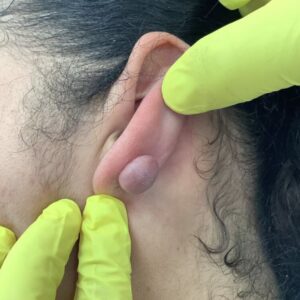
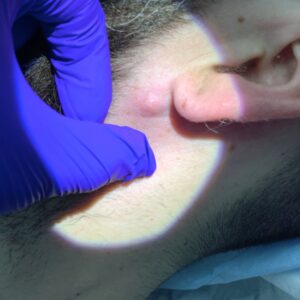
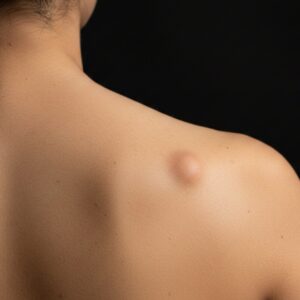
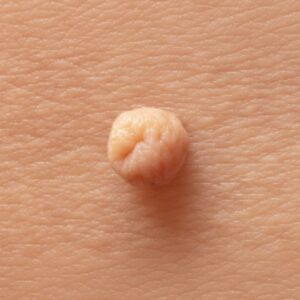
Moles can appear anywhere on the body, but those located on sensitive areas such as the neck, scalp, and groin often raise additional questions. Visibility, friction from clothing or hair, discomfort, and concern about scarring are common reasons people seek assessment. In these locations, careful clinical evaluation is particularly important, as anatomy, skin thickness, and healing behaviour differ from other areas of the body.
This article explains how mole removal is approached on sensitive areas, what makes these locations different, and what patients can realistically expect from assessment through to healing.
Why Sensitive Areas Require a Different Approach
Moles on the neck, scalp, or groin are not automatically more serious, but they do require greater procedural planning. These areas may involve:
- Higher friction or movement
- Increased moisture or hair density
- Greater visibility or cosmetic sensitivity
- Nearby nerves, blood vessels, or hair follicles
For these reasons, removal is never approached as a “one-size-fits-all” procedure. The technique used depends on the mole’s appearance, size, depth, location, and clinical findings at assessment.
Common Sensitive Locations and Considerations
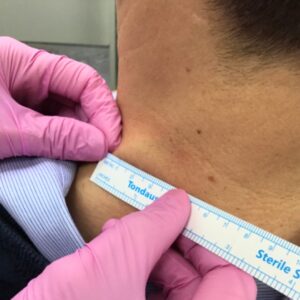
Neck Mole Removal
The neck is one of the most frequently requested areas for mole removal. Moles here are often visible and may rub against collars, jewellery, or clothing.
Key considerations:
- Skin movement during healing
- Cosmetic outcome due to visibility
- Tension lines that can influence scarring
In some cases, multiple moles may be present on the neck and assessed together. Where appropriate, removal may be discussed for more than one lesion in a single visit, though this depends on clinical findings.
You can see an example of multiple neck moles being removed in this video featuring Mr Parviz Sadigh, which demonstrates how lesions are approached individually rather than as a batch process:
Scalp Mole Removal
Scalp moles are commonly noticed when brushing hair, washing, or during haircuts. They can be harder to monitor due to hair coverage.
Additional scalp-specific factors:
- Hair growth patterns
- Bleeding risk due to vascularity
- Healing under hair-bearing skin
Shaving is not always required; when it is, it is usually limited to a small area around the lesion. Scalp moles may also be more prone to irritation from combs or clippers, which often prompts assessment.
Groin Mole Removal
The groin is considered a sensitive area due to skin type, moisture, and friction. Moles here are commonly assessed due to irritation, growth, or uncertainty rather than appearance alone.
Important considerations:
- Increased friction and moisture
- Higher risk of delayed healing
- Privacy and comfort during examination
Assessment in this area is conducted respectfully and clinically, with attention to patient comfort at all times. Removal is discussed only if appropriate following examination.
Assessment Comes First
Before any mole is removed, particularly in sensitive locations, a clinical assessment is essential. This allows the clinician to determine:
- Whether removal is appropriate
- Which technique may be suitable
- Whether histology (laboratory examination) is recommended
During assessment, clinicians may use dermoscopy (a magnified skin examination tool) to evaluate the mole’s features. This does not confirm a diagnosis but helps guide next steps.
Mole Removal Techniques Used on Sensitive Areas
The technique used depends on the mole itself, not just its location. Below is an overview of commonly discussed options.
Common Techniques (Overview)
| Technique | When It May Be Considered | Key Notes |
|---|---|---|
| Shave excision | Raised or superficial moles | No stitches; healing varies |
| Surgical excision | Deeper or flat moles | May involve stitches |
| Elliptical excision | Moles requiring margin control | Linear scar possible |
You can read more about shave excision in detail.
Facial, Hairy, and Sensitive Skin Overlap
Some sensitive areas overlap with other clinical considerations:
- Neck and face often share cosmetic concerns
- Scalp moles may be hairy or sit within hair-bearing skin
- Groin skin behaves differently to facial or trunk skin
Related reading that may be helpful:
Each of these pages explores specific nuances that may also apply to sensitive-area moles.
Pain, Anaesthetic and Comfort
Local anaesthetic is commonly used when mole removal is performed. Sensation, discomfort, and recovery vary depending on the individual and the area treated.
- Some areas may feel more sensitive initially
- Numbness wears off gradually
- Post-procedure discomfort is usually short-lived but varies
Clinicians will explain what to expect before proceeding.
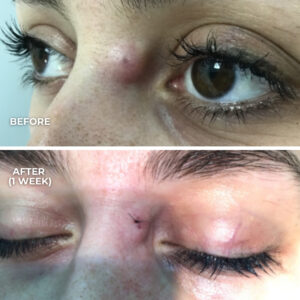
Healing and Scarring on Sensitive Areas
Any procedure that breaks the skin can result in a scar. On sensitive areas, scarring is influenced by:
- Skin tension and movement
- Location and direction of the incision
- Individual healing response
General Healing Factors
| Factor | Why It Matters |
|---|---|
| Location | Neck and groin move more |
| Skin type | Healing varies between individuals |
| Aftercare | Influences scar quality |
Scars continue to mature over months. Final appearance cannot be predicted at the time of removal.
Histology and Safety
Some moles, particularly those that are changing or atypical, may be sent for histology after removal. This involves laboratory examination of the tissue.
Histology:
- Is not required for every mole
- Is discussed when clinically appropriate
- Helps provide additional information
The decision is based on assessment findings rather than location alone.
Who Performs Mole Removal on Sensitive Areas
At City Dermatology Clinic, mole removal may be carried out by consultant dermatologists or surgeons depending on the nature of the lesion and its location. Sensitive areas such as the neck or scalp are often managed by clinicians experienced in skin surgery and minor procedures.
Where relevant, clinicians such as Mr Parviz Sadigh are involved in procedures affecting anatomically delicate or visible areas, ensuring a careful and measured approach.
When Removal May Be Delayed or Not Offered
In some situations, removal may be postponed or not recommended, for example:
- Inflamed or infected skin
- Lesions requiring further assessment first
- Situations where healing risk outweighs benefit
A consultation allows these factors to be discussed openly.
Mole removal on sensitive areas such as the neck, scalp, and groin requires thoughtful assessment and a tailored approach. Location alone does not determine whether removal is appropriate, clinical features, patient concerns, and healing considerations all play a role.
A consultation provides the opportunity to examine the mole, explain suitable options, and set realistic expectations before any procedure is considered.